










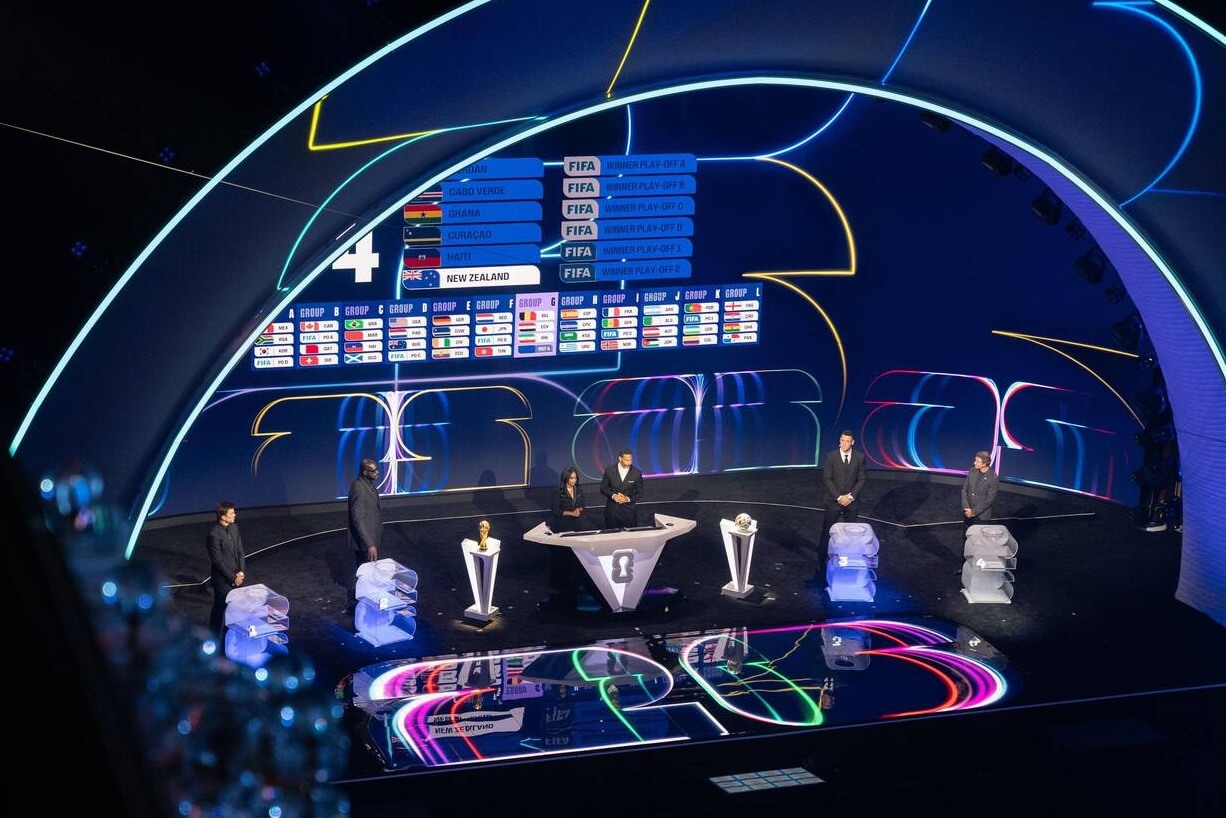
Ready and Raring
Commentary: Derek Ross for Soccer360 Magazine
For decades, the rest of the world has looked at the United States’ relationship with football, sorry, soccer, as a kind of long-running experiment. Could a country that measures distance in hot dogs and weight in bald eagles ever truly embrace the world’s greatest game? Could a nation that calls its domestic championship the World Series really be trusted with something that actually involves the… world?
Well, we’re all gonna find out soon enough because next summer, the United States, along with Canada and Mexico, polite and passionate supporting acts, will host the World Cup. And for the first time in its history, football will go full Hollywood. Now you might here it being called tacky or called just more American razzmatazz but the one thing you won’t hear it being called is subtle. This isn’t just a tournament; it’s a coming-out party, a marketing strategy, and a logistical fever dream stitched together by FIFA, Apple TV, and several billion dollars in corporate optimism. The global game isn’t just visiting America; it’s taking over the basement and the five floors above it!
The World Cup Meets the Super Bowl.
When FIFA awarded the 2026 tournament to North America, traditionalists gasped in their best John McEnroe,’ You cannot be serious.’ You can’t seriously let the Americans run it,’ they cried, ‘they’ll put fireworks in the group stages.’ And yes, they absolutely will, and that’s precisely the point. The numbers alone are staggering. Sixteen host cities. Forty-eight teams. One hundred and four matches. It’s not a tournament anymore; it’s a content calendar. FIFA calls it ‘the biggest World Cup ever.’ Everyone else calls it ‘an endurance test with national anthems.’ Expect pre-match flyovers, celebrity halftime shows, and commentary teams with more sponsors than sense. Don’t be surprised if the opening ceremony features a Katy Perry marriage proposal, another Eagles reunion, a couple of singing Buffalos and a hologram of Pelé kicking a CGI football into space. Because if there’s one thing America does better than anyone, it’s make a spectacle out of absolutely everything. The rest of the world tunes in for football; the U.S. wants a franchise launch.
Get Branded.
Let’s be honest: the World Cup’s American era was inevitable. FIFA and the U.S. were destined to find each other, two organizations built on branding, licensing, and an almost religious devotion to sponsorship revenue. By 2026, you won’t just be watching football; you’ll be subscribed to it. Apple, Adidas, Amazon, Visa, Coca-Cola, and whoever Elon Musk is feuding with that week will all have their logos stamped across stadiums, shirts, and maybe the referee’s forehead. And that’s before we even get to the over-priced paraphernalia AKA, merchandise. You’ll be able to buy official VAR challenge flags, limited-edition stadium nachos, and replica shirts that cost more than a new Toyota. The World Cup used to be a global celebration. Now it’s an interactive retail experience powered by microtransactions.
As FIFA President Gianni Infantino once said and probably meant: ‘Football unites the world.’ It surely does, though mostly through PayPal.
The Great American Hope.
On the pitch, the United States Men’s National Team, will enter the tournament with something it’s rarely had before: expectations. This is the most talented generation in U.S. football history, another golden generation. In fact, the U.S. men’s team has produced so many golden generations that Fort Knox is starting to get nervous. But jokes aside, they do have a few tasty players. Christian Pulisic, AC Milan, Weston McKennie, Juventus, Tyler Adams, Bournemouth, and Gio Reyna, Borussia Dortmund who may or may not be talking to Gregg Berhalter again. For once, the U.S. team isn’t a punchline; it’s a project.
And it’s kinda paying off. Since 2019, the U.S. has lifted two CONCACAF Nations League titles, held Mexico in a psychological chokehold, and produced more European-based players than at any time in its history. The average age of their World Cup 2022 squad? Just 25. The average ego size? Considerable. So yes, 2026 might actually be the year the U.S. goes beyond the ‘respectable round of 16’ phase. Or, alternatively, the year they draw 0–0 with Canada in front of 80,000 people and get eliminated by Uruguay on penalties. Either way, it’ll trend on Twitter.
Canada: The Polite Powerhouse.
Canada, meanwhile, is quietly building something special. Led by Alphonso Davies, possibly the only player fast enough to outrun Air Canada’s baggage delays, they’ve emerged as one of the most exciting sides in CONCACAF. Davies, along with Jonathan David and Tajon Buchanan, gives Canada some real attacking firepower. Their 2022 World Cup campaign ended early, but they scored their first-ever goal and left a lasting impression. Which, by Canadian standards, is practically world domination. Anyway, the Canadian soccer boom is real: youth participation is soaring, the domestic league, CPL is growing, and the women’s team are Olympic champions. Expect maple-leaf tattoos, polite chants, and Tim Hortons-themed watch parties nationwide.
Mexico: The Eternal Party.
Then there’s Mexico, football’s eternal heartbeat in North America. Their fans travel in numbers that defy physics. Their chants shake entire cities. Their love of the game borders on religion. Mexico will host matches in Guadalajara, Monterrey, and Mexico City, making it the first nation ever to host three World Cups, but without ever winning it. In fact, the Trophy probably needs a tourist visa just to visit. The pressure will be immense, but the atmosphere? Unmatched. Expect every Mexican match to sound like a mariachi band inside a volcano. If football is theatre, Mexico brings the fireworks, the choreography, and the tequila.
Content and More Content.
But the biggest story of 2026 might not even happen on the pitch. It’ll happen on screens. Thanks to Apple TV’s $2.5 billion deal with Major League Soccer, and the rise of Netflix-style football documentaries, the sport has officially entered the content era. Football used to be about tactics and triumphs. Now it’s about access. You’ll see 4K footage of locker room speeches, drone shots of training sessions, and players crying in slow motion to acoustic covers of Coldplay songs. ‘Drive to Survive’ made Formula 1 popular in America; ‘Welcome to Wrexham’ made non-league football a global hit. So, imagine what FIFA can do with the world’s biggest tournament. Expect the 2026 World Cup docuseries to feature Cristiano Ronaldo narrating over drone shots of Dallas. Football’s no longer about who wins. It’s about who gets the best camera angle.
Europe Rolls Its Eyes and Takes Notes.
Of course, not everyone is thrilled about football’s American makeover. In Europe, purists are clutching their scarves. ‘This isn’t football,’ they complain, ‘it’s bordering on entertainment!’ Yes. Exactly. European fans mocked MLS for years, too corporate, too plastic, too clean. And yet, their own clubs now have NFT collections, Netflix deals, and TikTok partnerships. The Premier League sells itself like the NFL with better haircuts. The truth? The ‘Americanization’ of football isn’t coming, it’s already happened. The only difference is that the Americans have the good grace to admit it.
Football Meets Tailgate.
And let’s face it, American fans are going to throw one hell of a party. Picture it: tailgates outside stadiums, red solo cups in hand, pre-match barbecues bigger than Manchester. Forget ultras with flares, expect dads in cargo shorts debating expected goals next to the grill. The atmosphere will be less European chaos and more college football carnival. But that’s not a bad thing. If anything, it’ll make the World Cup more accessible, more family-friendly, more community-driven, and yes, even more marketable.
FIFA’s Jackpot.
Financially, the 2026 tournament could be the biggest cash grab in football history, and that’s saying something. FIFA projects over $11 billion in revenue, shattering previous records. Of course, FIFA insists that the tournament isn’t about money, which is true. It’s about obscene amounts of money. The 2022 Qatar World Cup made $7.5 billion; the U.S. is about to make that look like your child’s lunch money. Needless to say, ticket demand will be so intense that fans will end up selling the cars, jewellery and possibly a relative just to afford a ticket, all in the name of watching Canada draw 0-0 with Morocco. The 1994 World Cup, also hosted by the U.S., still holds the record for the highest total attendance, 3.6 million. In 2026, with 48 teams, that record will almost certainly be obliterated.
The Irony of It All.
Here’s the delicious irony: for decades, America was mocked for not ‘getting’ football. Too slow, too low-scoring, too confusing. Now? The rest of the world is following the American model. The Premier League is a marketing juggernaut. La Liga plays exhibition matches in Miami. Even FIFA is copying the Super Bowl playbook. Football didn’t just conquer America. America quietly conquered football. And when the 2026 World Cup kicks off, it won’t just be a tournament, it’ll be a cultural collision. A global sport meeting the global entertainment industry. Yes, there’ll be fireworks. Yes, there’ll be commercials between national anthems. Yes, there’ll probably be a halftime show featuring Drake, Dua Lipa, and a fun team-talk given by Ryan Reynolds. And yes, the rest of the world will roll its eyes, call it excessive, and secretly love every minute of it. Because for all the jokes, one truth remains: football has always been about joy, noise, and chaos. And if there’s one country that truly understands how to make noise, sell chaos, and film it in slow motion … it’s America. God bless her.