










Commentary by Derek Ross
The 2026 FIFA World Cup: Bigger, Wilder, and Three Times the Trouble
If you thought past World Cups were grand affairs, then my advice to you is buckle up, because 2026 is shaping up to be a logistical blockbuster on par with a Hollywood disaster flick, … except with better snack options and fewer Matt Damon cameos. This is the first tournament to feature 48 teams, previously capped at 32, ensuring fans will be able to grow a beard and learn a new language and still be waiting to find out who finished third in Group L. But FIFA’s expansion to 48 teams isn’t just about inclusion, it’s about tapping into 16 extra fanbases, which in FIFA-speak translates neatly into 16 extra rivers of ticket sales, TV rights, and suspiciously overpriced commemorative scarves. And it’s first ever to be hosted by three countries at once, the United States, Canada, and Mexico. Afterall why have one logistical nightmare when you can have three at the same time, right? It all kicks off on June 11, 2026, and wraps up on July 19. That’s 39 days of footballing chaos spread across an entire continent, which sounds thrilling until you realise your team’s next match might be over a thousand miles away, across two time zones, and through a life-threatening blizzard.
The Great North American Road Trip… If You Survive It.
The United States will provide eleven host Cities. From the palm-tree gloss of Los Angeles, SoFi Stadium, to the caffeinated drizzle of Seattle, the U.S. leg of the tournament reads like a pop culture playlist. Dallas’ AT&T Stadium will host nine matches, enough to make it the tournament’s football cathedral, while Houston’s NRG Stadium offers seven games plus a sprawling ‘Fan Fest’ in East Downtown, which promises food trucks, live music, and at least one confused country singer struggling with the offside rule. The MetLife Stadium in New York/New Jersey nabbed the biggest prize of all: the final on July 19. This didn’t happen without a little political wrangling, Dallas had been angling for the glory until FIFA presumably decided the Statue of Liberty looked better on a postcard than Jerry Jones. Elsewhere, cities like Miami, Atlanta, Kansas City, Boston, Philadelphia, and San Francisco Bay Area, Levi’s Stadium, will be hosting their own little slices of football history, plus the inevitable ‘wrong city’ Airbnb bookings.
Mexico – 3 Host Cities
Mexico’s trio of stadiums are pure pedigree. The legendary Estadio Azteca in Mexico City, already host to two iconic World Cups in 1970 and 1986, returns for a third run, like the Beyoncé of stadiums. Monterrey’s Estadio BBVA and Guadalajara’s Estadio Akron round out the Mexican venues, giving visiting fans both mountains and mariachi.
Canada – 2 Host Cities
Toronto’s BMO Field will host matches on the shores of Lake Ontario, meaning if a football fan squints from one side, he might just convince himself that he’s seen a buffalo. Fans might also experience a light breeze… or a hurricane-strength squall depending on the mood of the Great Lakes. Vancouver’s BC Place will make its World Cup debut, indoors and rain-proof, perfect for protecting visiting Brazilians from having to admit they own coats.
The Format: FIFA’s Math Problem
With 48 teams, FIFA had to rethink its tournament maths. The solution: 12 groups of four, with the top two from each group plus the eight best third-place teams moving on to a massive Round of 32. It’s essentially a football buffet, if you can’t get enough, there’s always another plate. This also means more upsets, more late-night heartbreaks, and more matches where both teams are still doing group-stage arithmetic on the pitch. Hosts are already locked into the draw: Mexico in Group A, Canada in Group B, USA in Group D. No more than two European teams can be in the same group.
The Stars of the Hosts
Let’s take a moment to look at the standout player from each host nation, the ones the home crowds will pin their hopes, and probably half their beer money, on.
- United States – Christian Pulisic
Captain America himself. Now in his prime, Pulisic will lead a U.S. squad that has quietly grown sharper in midfield and terrifyingly quick in attack. If the Yanks go deep, it’ll be because Pulisic found space between defenders the way a Tesla finds a parking spot in Palo Alto. - Mexico – Hirving Lozano
Still blessed with frightening pace and a knack for turning full-backs into traffic cones, Lozano will carry Mexican hopes. Add in the Azteca’s altitude, and visiting defenders may need oxygen tanks just to keep up with him. - Canada – Alphonso Davies
The Bayern Munich speedster remains Canada’s talisman, capable of changing games single-handedly. Expect him to cover more ground than a Canadian postie on double shifts, whether sprinting down the wing or bailing out his own defence.
Opening Week: A Three-Country Circus
It all kicks off on June 11 in Mexico City, with Canada and the USA starting their own campaigns the very next day. This means three different opening ceremonies in three different countries, FIFA clearly doesn’t believe in jet lag. Fans will be attempting to follow matches across thousands of miles. And thanks to three host countries, plenty of these fans will turn up at the wrong airport, eager and ready to get behind their team just in time to realise they’re 2,000 miles away and stuck eating poutine instead of tacos! Let’s be clear: this isn’t like hosting in Germany, where you can cross the whole country in four hours. Here, group-stage matches might involve a 6-hour flight and a climate shift from desert heat to freezing drizzle. Altitude in Mexico City will test even the fittest squads, while the humidity in Miami might require a substitution just for the referee. And let’s not even start on the time zones, one day’s football could span brunch in Montreal, afternoon in Dallas, and midnight in Los Angeles.
Fan Fest Mayhem
Expect gigantic ‘Fan Fests’, ones in every city, beer gardens in Houston’s EaDo, rooftop parties in Vancouver, beach screens in Miami. The Bay Area will have drone light shows; Seattle will have craft beer stands so artisanal the brewers will know your star sign. But with large crowds come small disasters: ticket scanners failing, beer taps running dry, and an inevitable moment where two fans from opposite sides realise, they’re staying in the same Airbnb. And the black market for tickets will be so busy that somewhere, someone will fork out $500 for a front-row seat …. to a car park in Vancouver.
The Vegas Draw
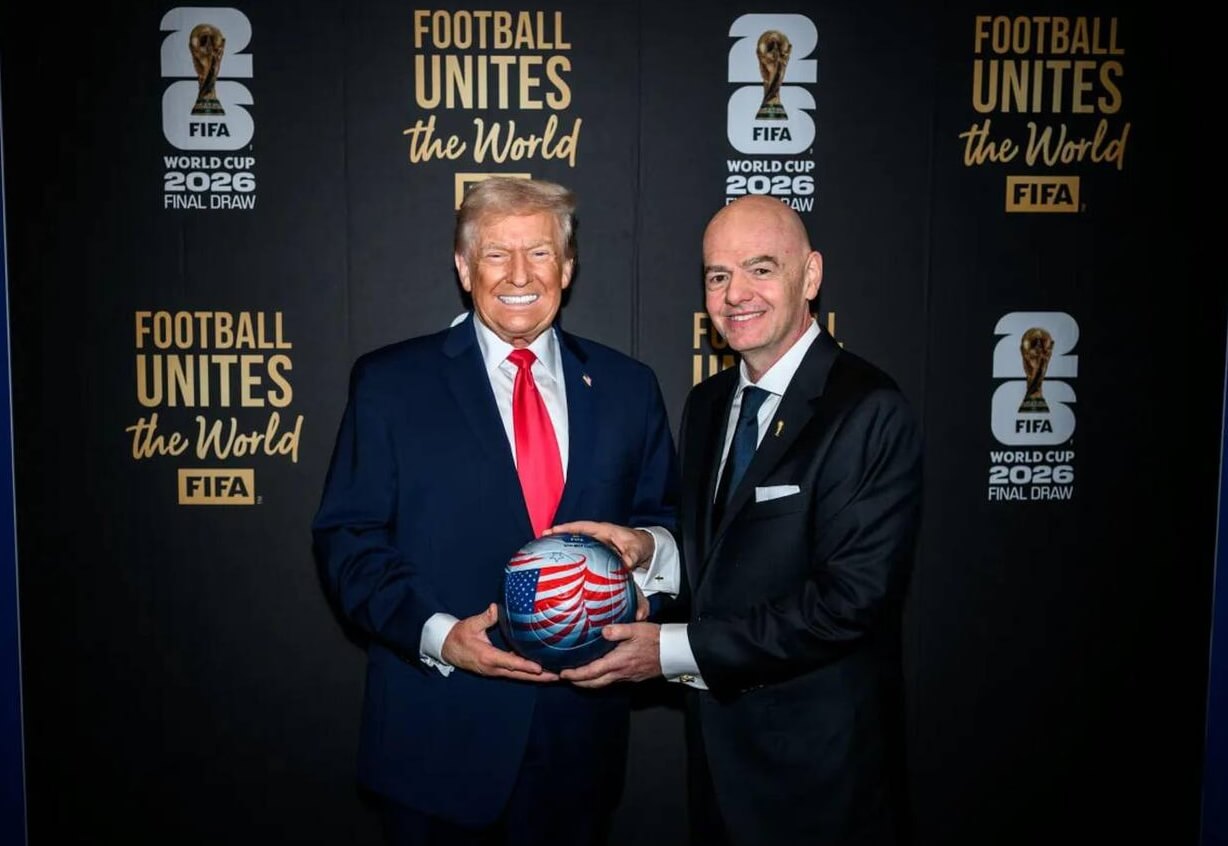
The final draw is scheduled for December 2025, likely in Las Vegas. Picture the world’s footballing elite gathered in a tacky five-star hotel where the lobby chandelier looks like it was stolen from a cruise ship, the fake marble columns are peeling, the carpet is louder than the slot machines, and possibly an Elvis impersonator announcing Group H. The draw will also reveal the always anticipated ‘group of death’, like France, England, and Uruguay all together, with a third-place wildcard still possible because FIFA loves drama. But the draw is less about chance and more about making sure that the big boys don’t meet too early, because heaven forbid Brazil knock out Germany before FIFAs had a chance to sell quarter-final viewing rights for a small fortune
Final Whistle Thoughts
The 2026 World Cup will be remembered for its scale, its chaos, and its sheer audacity. Hosting it across three countries is a gamble, part unity project, part logistical nightmare. And it’s almost certainly going to a World Cup where every goal is followed by a 10-minute VAR symposium, because nothing says beautiful game like watching officials argue over millimetres while fans reconsider their life choices. But if it works, it will be football at its most global, its most dramatic, and its most gloriously human. Here’s hoping the biggest disasters are only the kind you can laugh about afterwards, cold fries, wrong stadiums, altitude headaches, and that the football delivers moments we’ll talk about for decades. Because for all the travel headaches, border crossings, and stadium beer queues, the real magic will still be the same: a ball, a pitch, and a billion hearts racing at once. But a word of caution. Once it kicks off there will be no escaping it, no place to hide. It’ll be on your phone, your fridge! Every bar, café, office and probably your dentist’s waiting room will be showing it. Even your cat will know the score. The tournament will invade our lives like a needy relative. So don’t complain you weren’t warned.